
Loading...
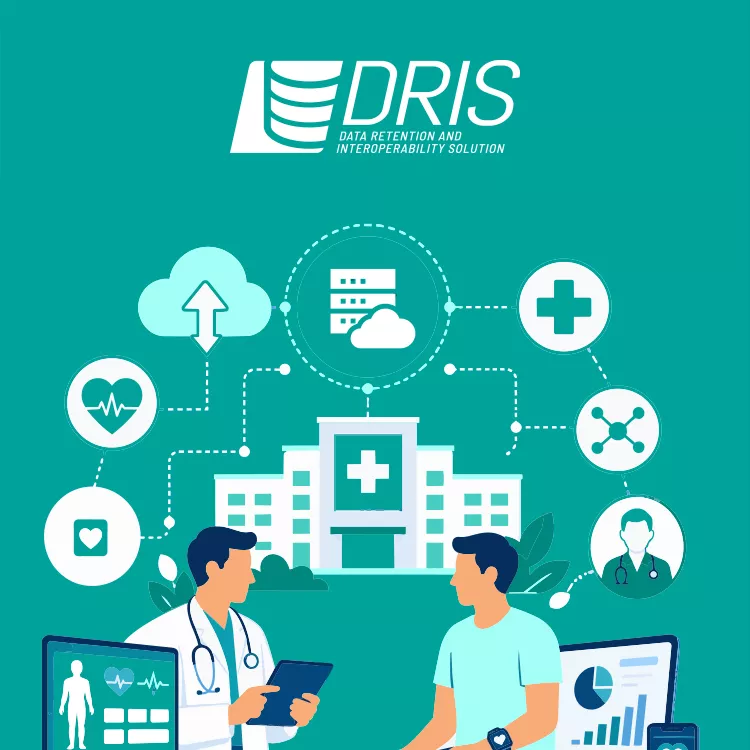
Data can fundamentally transform the future of healthcare. The challenge, however, is to free data from the silos in which it exists. DRIS not only helps decommission legacy technology and consolidate data, but also mitigates the challenge of accessing data from disparate systems.

CITI Healthcare’s Data Retention and Interoperability Solution, DRIS, has been designed to decommission legacy applications which reduces operational costs. DRIS is the right choice for organizations grappling with rising costs of maintaining legacy applications, while trying to provide better health outcomes and experiences.
DRIS can archive Clinical, Patient accounting, Images, Payer, supply chain, ERP and ancillary data.
Data Trends
Canonical Data Model
Multi Modular and Domain
Database and Cloud Agnostic
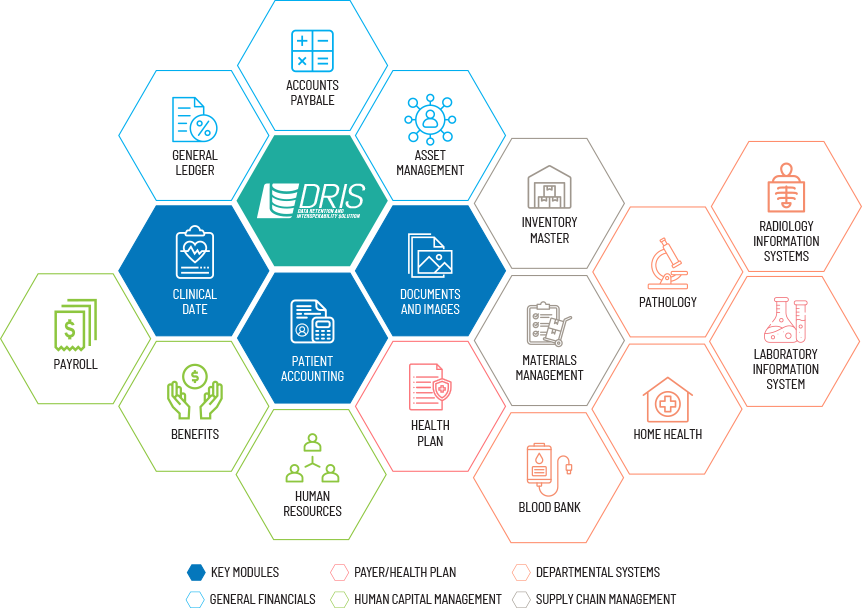
DRIS is a HIPAA compliant, standards-based, light-weight, vendor-neutral and comprehensive repository. It is designed to archive electronic Protected Health Information (PHI) from all major enterprise databases, including clinical, financial, human resources, payroll, ancillary payer, documents, images and ERP applications. DRIS uses the Data Lakes ‘store-everything’ approach, allowing for the storage and quick retrieval of large sets of diverse data types, which can then be processed by open sourced frameworks such as Hadoop.
DRIS allows the data to be viewed within the EHR at the point of care through its simple yet rich graphical user interface (GUI). An integrated document viewer enables viewing documents and images in various formats such as PDF, JPG, PNG, TIFF, RTF etc. DRIS also has a built-in scanning and OCR feature, and can generate PDF (PAMI) and CCDA documents from clinical information. Roles and authorizations can be customized to allow clinicians access to relevant data through their EHR, while other users such as HIM and Legal can access it directly. DRIS also makes it easy to generate reports, run queries, make parameter changes, and add filters to visualize the data, while complex processing runs in the background.
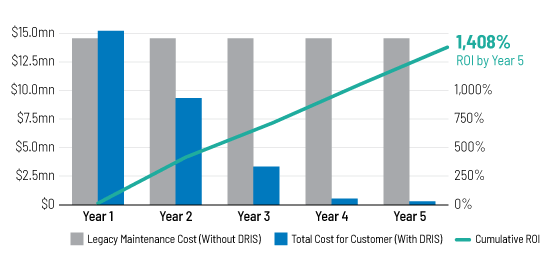
The financial gains from decommissioning legacy systems with DRIS are attributed to decreasing or eliminating legacy system licenses, weekly overhead for data management, legal discovery requests, loss of productivity and hardware and infrastructure maintenance costs, among other factors. This results in significant cost savings and increased productivity by interacting with CITI Healthcare’s vendor-neutral archival solution.
DRIS can follow both subscription and perpetual license-based model, with 24/7 support and fixed maintenance cost regardless of the number of applications decommissioned. The organization only bears a one-time professional services cost of data extraction per application.
The graph below provides a summary of DRIS' ROI value, as a result of archiving legacy applications over the period of 5 years
DRIS has been implemented by leading healthcare institutions who are saving millions of dollars while streamlining provider workflows, securing legacy data, harnessing the power of predictive analytics and trends, and satisfying compliance and regulatory requirements.
Director
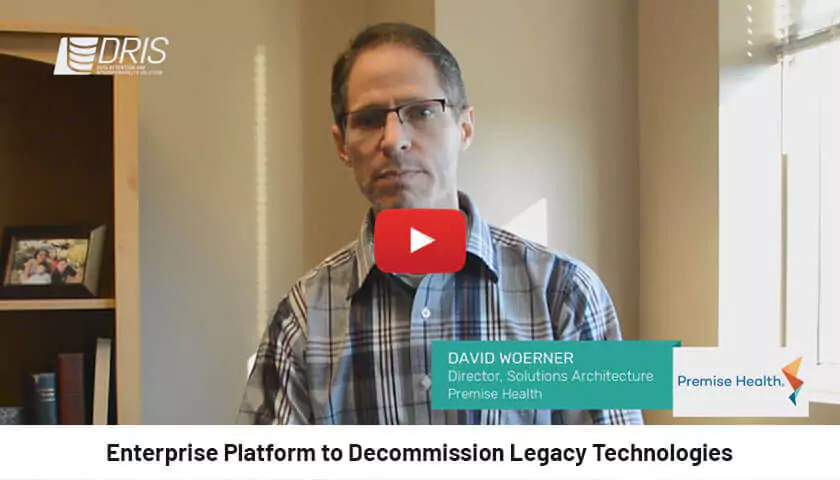
The main reason we bought DRIS was because of its integration with our EHR, and it makes it seamless. If a user is in a record, they can click a button and think they are still in the EHR, but they are seeing the archive from DRIS. We also have separate logins for our HIM folks, who can go directly in and handle the release of information and everything else directly from the application. It works out well because the clinical end users do not have to worry about it, but we have the capabilities we need for the HIM staff.
Director
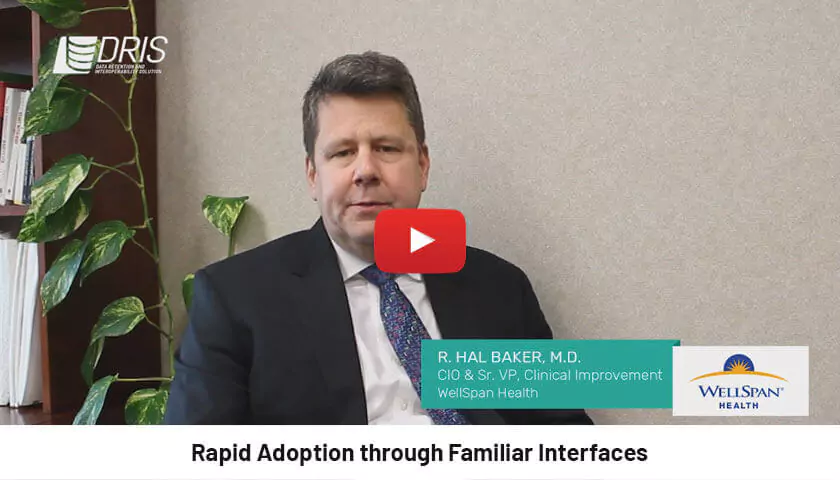
Our goal with CITI's system is not just to see data archiving from a compliance perspective. We have staff members who are actually using the system for patient care to look at the historical patient journey in general, even beyond what we have in our EHR. DRIS gives us that. We can actually pull a record up within the patient context and see, without even leaving the patient or their chart, all the historical data through DRIS. The benefit is not just the archive and having it available. If we need to do a compliance audit or something like that, we use the archived data, but the goal is to be able to use the archived data for patient care and to actually have all the data accessible for the long term. That was one reason we chose DRIS over other solutions.
Director
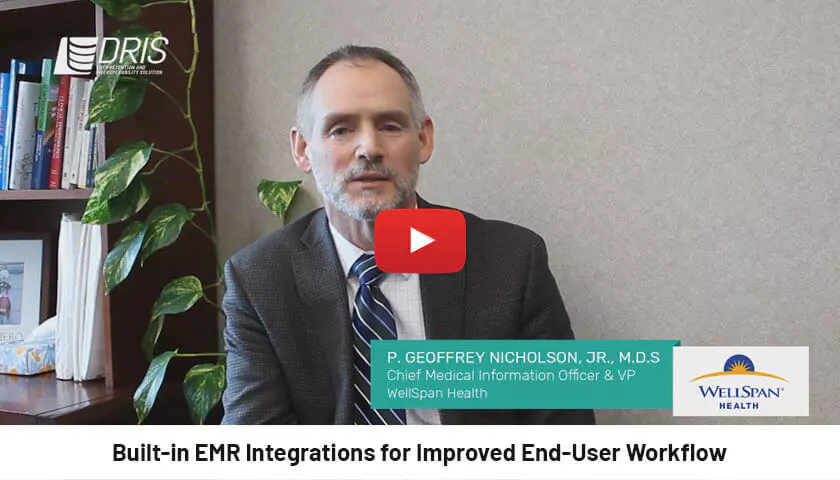
DRIS can tie into the context of the patient so well. It looks like it is in the chart itself when we are looking at that data. DRIS is something that the doctors want as soon as we move away from their legacy EMRs. We can't get integrated fast enough. Once we get DRIS up and running and have a link doctors can use, that helps to make things smoother for everybody.
Analyst/Coordinator
We haven’t had any issues where CITI has had to reach out to us first. When I create a ticket, I usually get a phone call within a few minutes, and they are very reactive. Their project lead and technical staff members are very engaging and responsive, and when we request meetings, they make time to understand our issues and requirements. Working with CITI has been very easy, especially during the initial archival, and whenever there has been an issue, we have jumped on a call and talked it through. Overall, they are very customer service oriented. We have enjoyed building the relationship, and as long as the application remains accessible, I will be satisfied.
Analyst/Coordinator
A key feature that helped us achieve our outcomes with CITI was the ability to create policies. The CITI team wrote out the policies after sitting down with us and reviewing certain guidelines, and the vendor built the policies based on the triggers. Being able to apply those policies, remove items from the database, and complete the data migration has helped us achieve our outcomes. The main outcome we have with DRIS is the ability to archive records based on those guidelines. That is pretty important.
AI/ML & RPA Capabilities




Our Solutions
Bridging gaps in service coordination to maximize interventions and improve outcomes.


Data Visualization and Management
Practice Areas
Our practice areas are built to address key areas of Social Determinants of Health (SDOH)

Health Quality and Patient Outcomes

Healthcare Access and System Management
Making a difference, changing lives, and impacting communities through our human-centered solutions.
IT Services
Cutting-edge services to enhance organizational efficiency.



Enterprise and Mobile App Development

Financial Operations for Modern Government Programs
Blogs
Learn what leading industry experts are saying about industry challenges and what the future holds.
Testimonials
Request Demo
We appreciate your interest in our solutions.